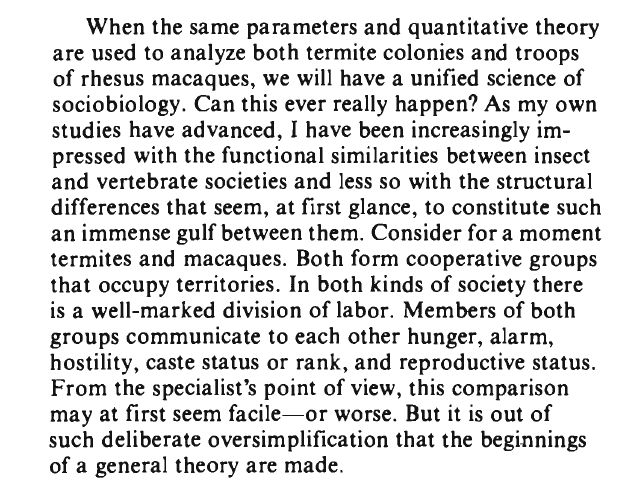
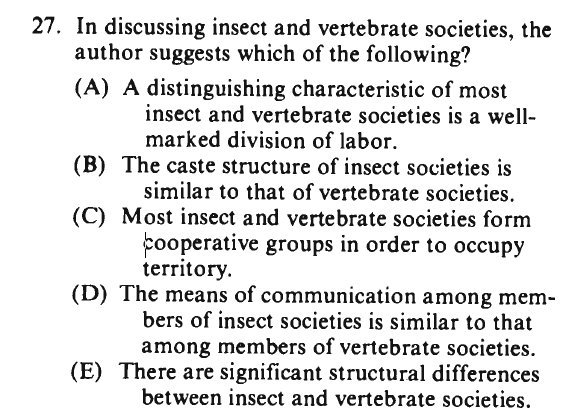
I was thinking between C and E and ended up picking C; i figured out why C is wrong because the option says “in order to occupy territories” and the passage doesn’t say that; it just says “that occupy”
My reason for rejecting E was that the passage says
“I have been increasingly impressed
with the functional similarities between insect
and vertebrate societies and less so with the structural
differences that seem, at first glance, to constitute such
an immense gulf between them.”
So from this I inferred that structurally there isn’t a huge difference because of the way the sentence is phrased “that seem”“at first glance” ; i thought this meant that when first looked at the differences are huge but when actually studied they aren’t that different.
Can someone explain what the inference of that line (i.e. I have been increasingly impressed…) is and also an explanation for why each option is wrong/right.
Thanks : D
Pay close attention to what “that seem, at first glance” modifies - the gulf or how big the difference makes them incomparable.
That phrase is saying that, at first glance, the difference seem to say we can’t compare thrm, but on closer inspection, we can at least compare their functional similarities.
A. Marked division of labor is cited as a trait of termites and marquee, we have no idea about MOST
B. Both communicate social status ( ie caste status or rank), but that doesn’t mean their social structures themselves are similar.
C. Exactly what you said.
D. Both communicate Hunger, alarm, etc doesn’t mean the means of communication are the same
E. As explained earlier, the differences are significant but they don’t make them incomparable on a deeper or second look.
These significant structural differences are why a specialist might initially find the comparison facile or worse. But the author argues that deliberately oversimplifying across those differences can reveal functional similarities from which a general theory can begin to be built.