can u help understand this question?
do we use block of 4? or do we go by math strategy?
either ways how to do approach this question
hi. @gregmat can u pls help
Hi,
Kindly provide the links to the questions if you can.
hi @Kweku this is from friday’s test with oscar , i dont have the question link
the above link probably wont work, hence shared the screenshots
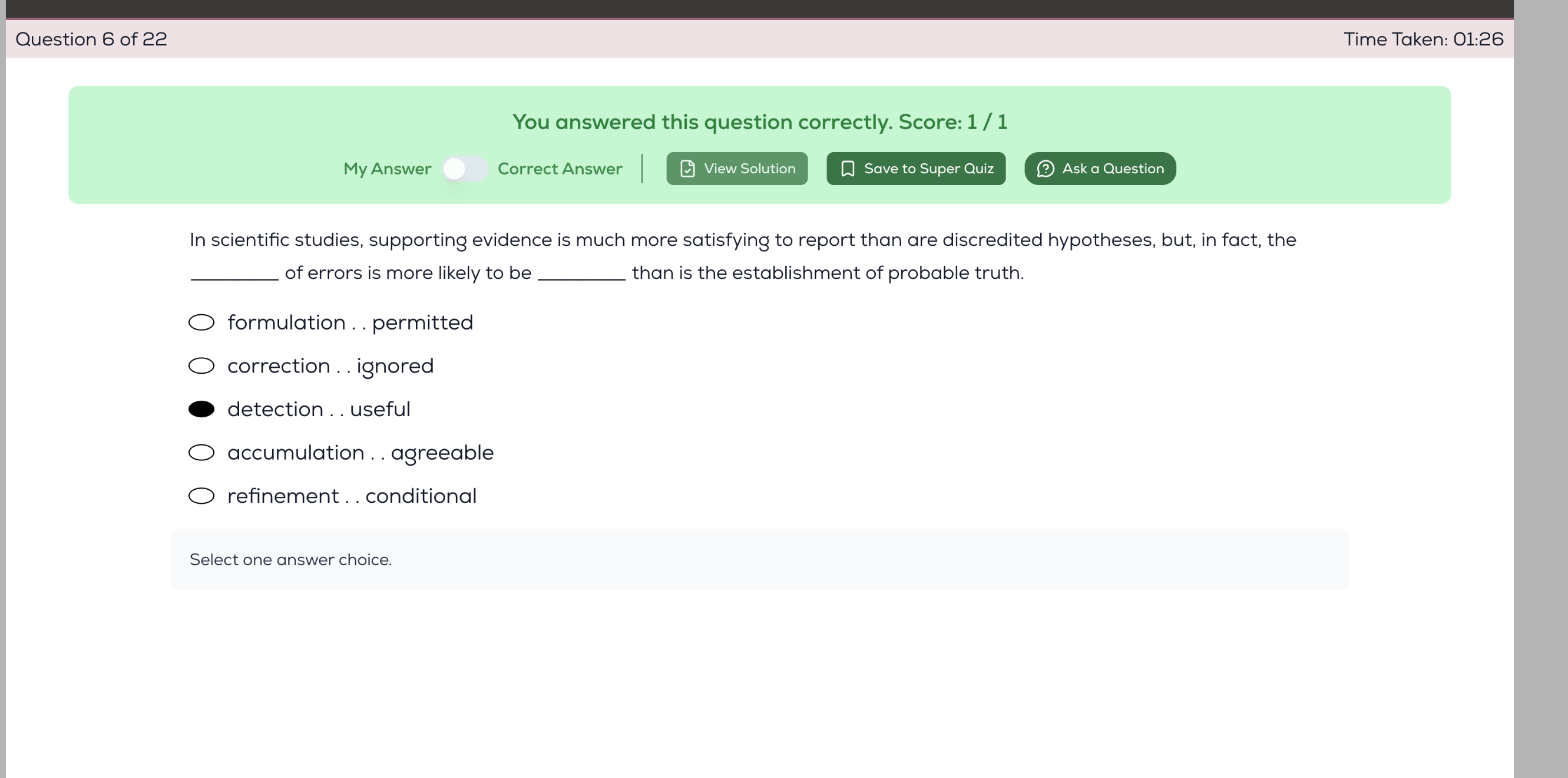
“but” creates contrast between the idea before and after it.
The idea before says “…supporting evidence is much more satisfying to report than discredited hypotheses”
Now notice that “establishment of probable truth” after “but” corresponds to “supporting evidence” before “but.”
So we can simplify the structure to:
Supporting evidence is more satisfying to report
BUT
Errors are more likely to be _____ than supporting evidence.
Since “but” tells us the second idea should provide a contrast, we need something positive about errors that can outweigh the establishment of probable truth.
Of the choices, useful gives us exactly that:
Detection of errors can be more useful than the establishment of probable truth.
We can then read the whole sentence with option C to check for logic and coherence
hi @Kweku thanks for your response. had a question:
Now notice that “establishment of probable truth” after “but” corresponds to “supporting evidence” before “but.”
How do we know this ? & are we also using block of 4 here?
hi @Kweku if you could also respond to other questions here, would be very helpful
Why can’t establishment of probable truth correspond to discredited hypothesis? Hypothesis means can be true = probable truth?
You’re focusing on “hypothesis” alone, but the phrase is “discredited hypothesis.”
A hypothesis can certainly turn out to be true, but a discredited hypothesis is one that has been shown to be unworthy of belief/acceptance.
“Establishment of probable truth,” on the other hand, means evidence has given us reason to accept something as probably true.
Hence,
supporting evidence = establishment of probable truth
discredited hypotheses = detection of errors
Yes. Twice actually.
From the first sentence, we can set up the first Block.
Supporting Evidence is more satisfying
Discredited Evidence is not satisfying.
‘But’ creates a contrast with the idea in Block 1 so we reverse the relationships to create Block 2:
Supporting evidence is not satisfying
Discredited Evidence is satisfying.
‘Useful’ together with ‘detection’ is the only option that creates the idea in Block 2.
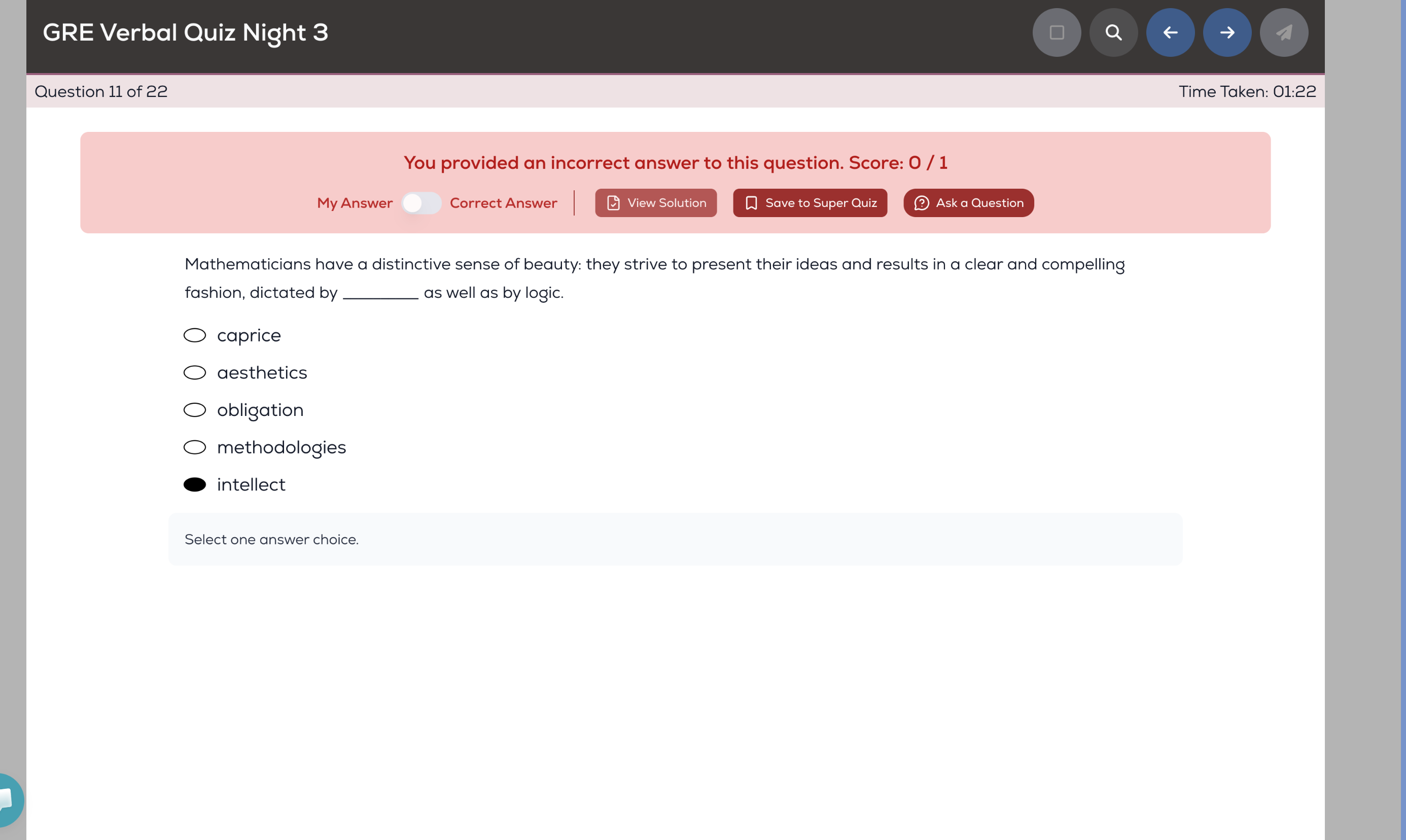
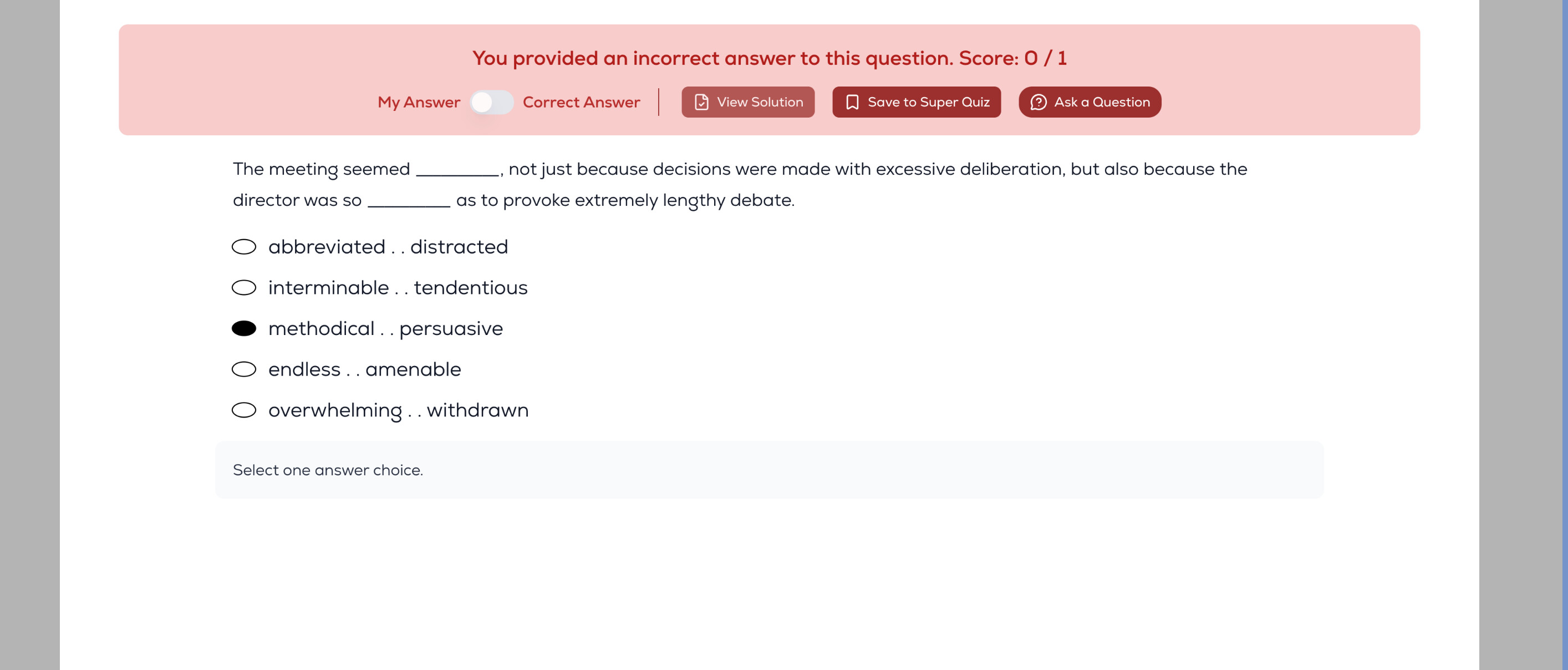
Colon creates support between ideas before and after it. Idea before talks about ‘beauty = aesthetics’
‘to’ creates the support between blank 2 and the idea after it. Since the idea after it is ‘provoke debate’, B2 must be ‘controversial’.
Though B2 is enough to answer this question, B1 is determined by the support created by ‘because’ which means we must support the idea of ‘excessive deliberation’ in B1.
‘Deliberation’ here means discussion, so ‘excessive discussion’ is ‘unending or interminable discussion.’
HI @Kweku can you pls help here!
HI @Kweku can you pls help here!
Sure @user14376. Happy to help.
I replied in this earlier message. However you can find same below:
Block of 4 can be used. Twice actually.
From the first sentence, we can set up the first Block.
\boxed{Supporting~Evidence} is \boxed{more ~satisfying}
\boxed{Discredited~Hypothesis} is \boxed{not~satisfying}.
‘But’ creates a contrast with the idea in Block 1 so we reverse the relationships to create Block 2:
\boxed{Supporting ~Evidence} is \boxed{not~ satisfying}
\boxed{Discredited ~Hypothesis} is \boxed{satisfying}.
‘Useful’ together with ‘detection’ is the only option that creates the idea in Block 2.
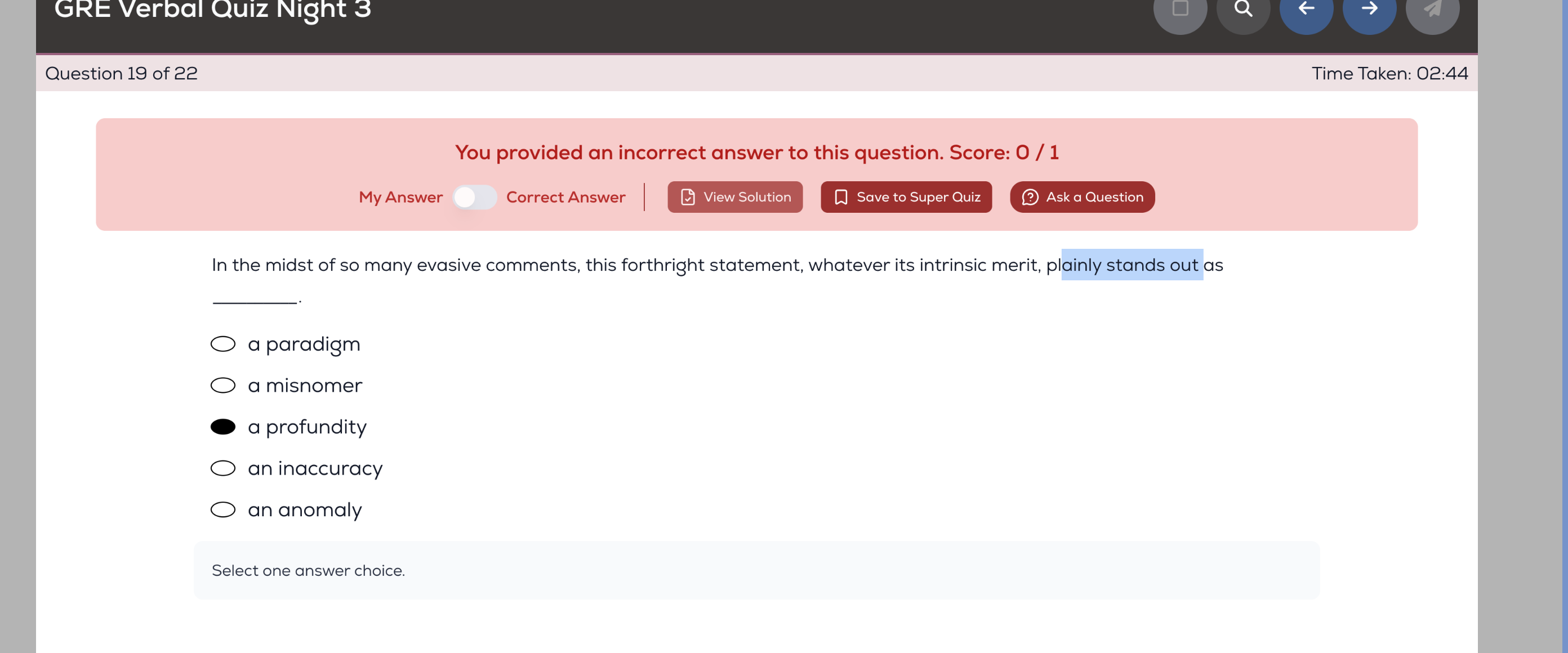
Not quite.
‘whatever its intrinsic merit’ = ‘we don’t know whether it is profound, accurate or something else’
All we know is that it is a forthright comment surrounded by evasive ones. Hence, it is an anomaly.
Per the text, we cannot say it is profound because it is forthright. Being forthright doesn’t mean you are profound
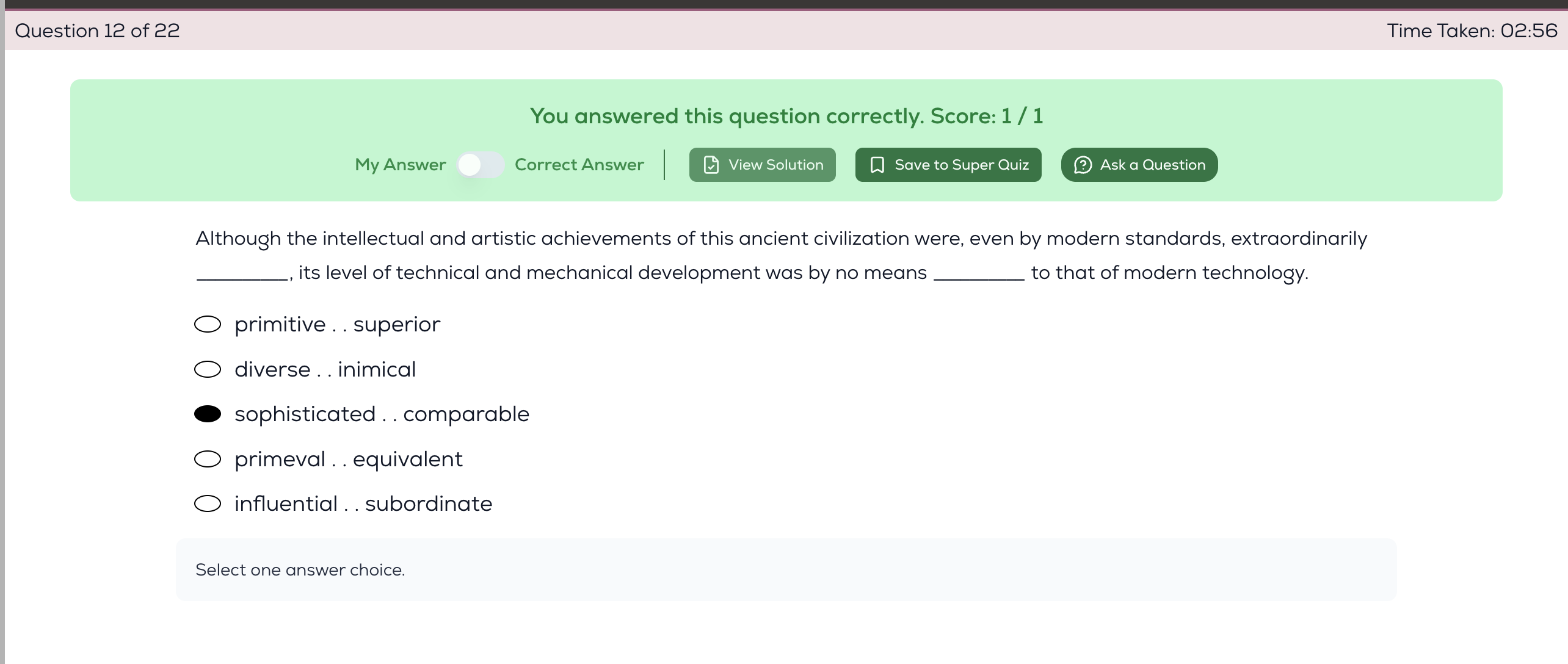
If you are asking whether equivalent can work in B2, yes, it can.
However, we need both B1 and B2 options to be correct, so C is the answer.
B1 for Option D (with equivalent) is not supported.