Hi,
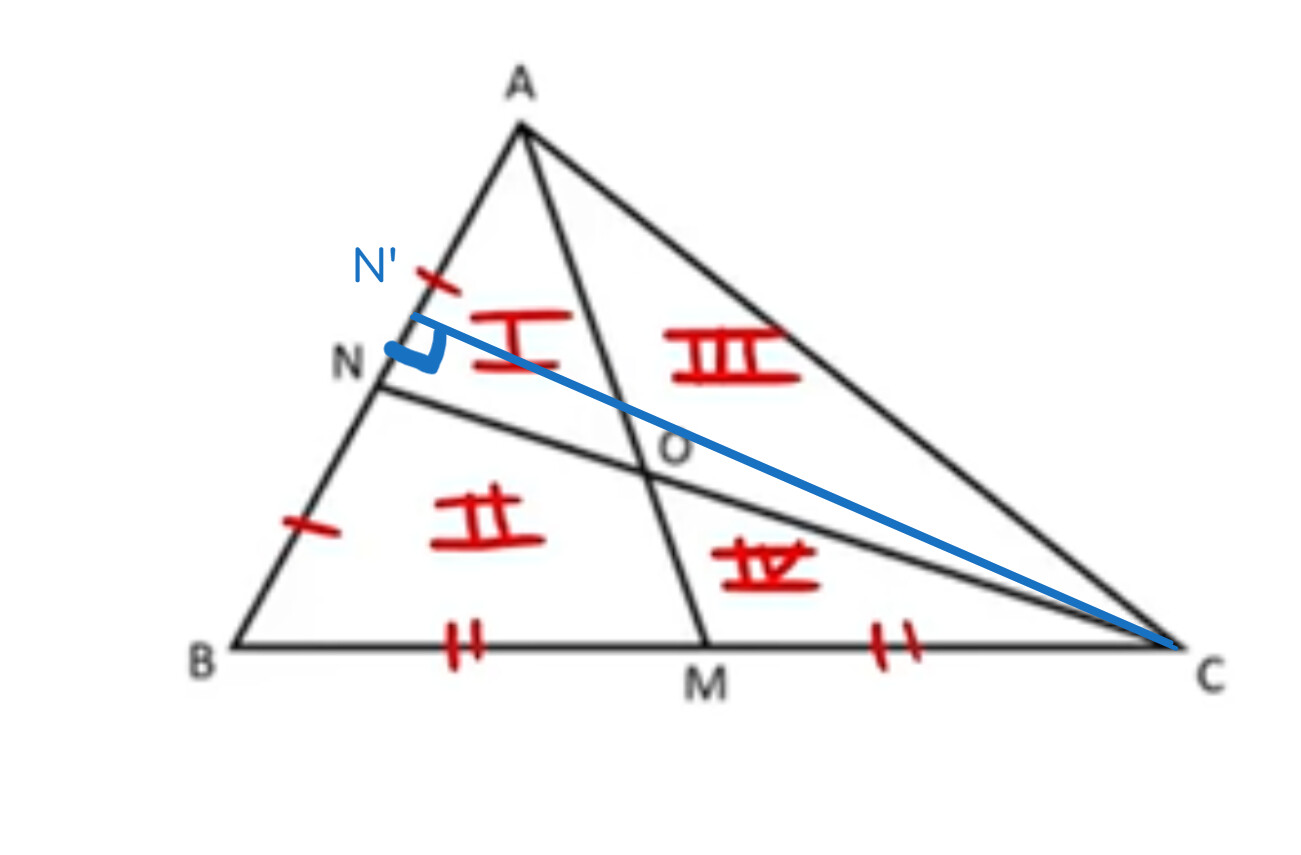
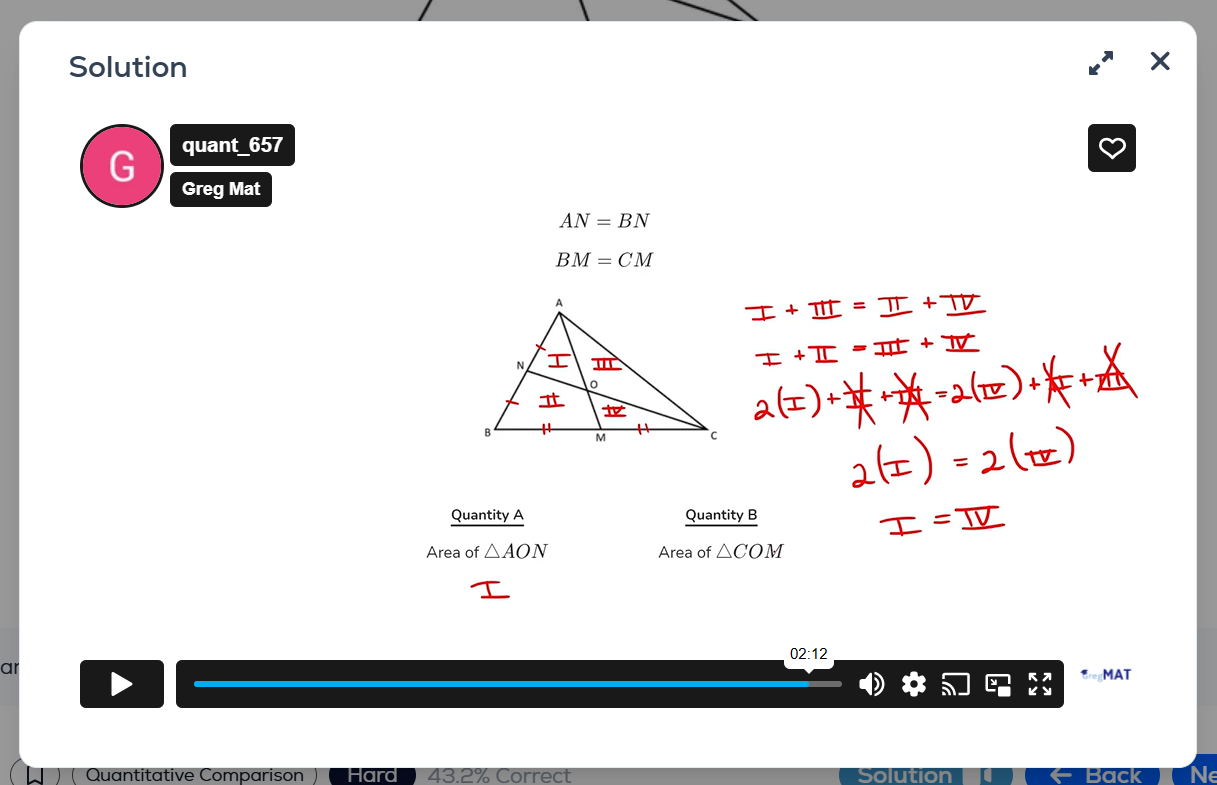
How did we conclude that line CN divides the triangle into two equal triangles? There is no congruence rule that has been used. The only one I can figure out is ASS ie. Angle ACD and common side CN and AN- but ASS is not a congruence rule
How did we conclude that line CN divides the triangle into two equal triangles? There is no congruence rule that has been used. The only one I can figure out is ASS ie. Angle ACD and common side CN and AN- but ASS is not a congruence rule
They’re not “equal” (congruent) triangles, but rather two triangles with the same area. This is because the base is the same (AN = BN), and the perpendicular from vertex C to side AB (height of each triangle) is shared by both triangles, ACN and BCN
Erm… how do we know that the AB is perpendicular.
That clears it up… Thank you!