Hi everyone,
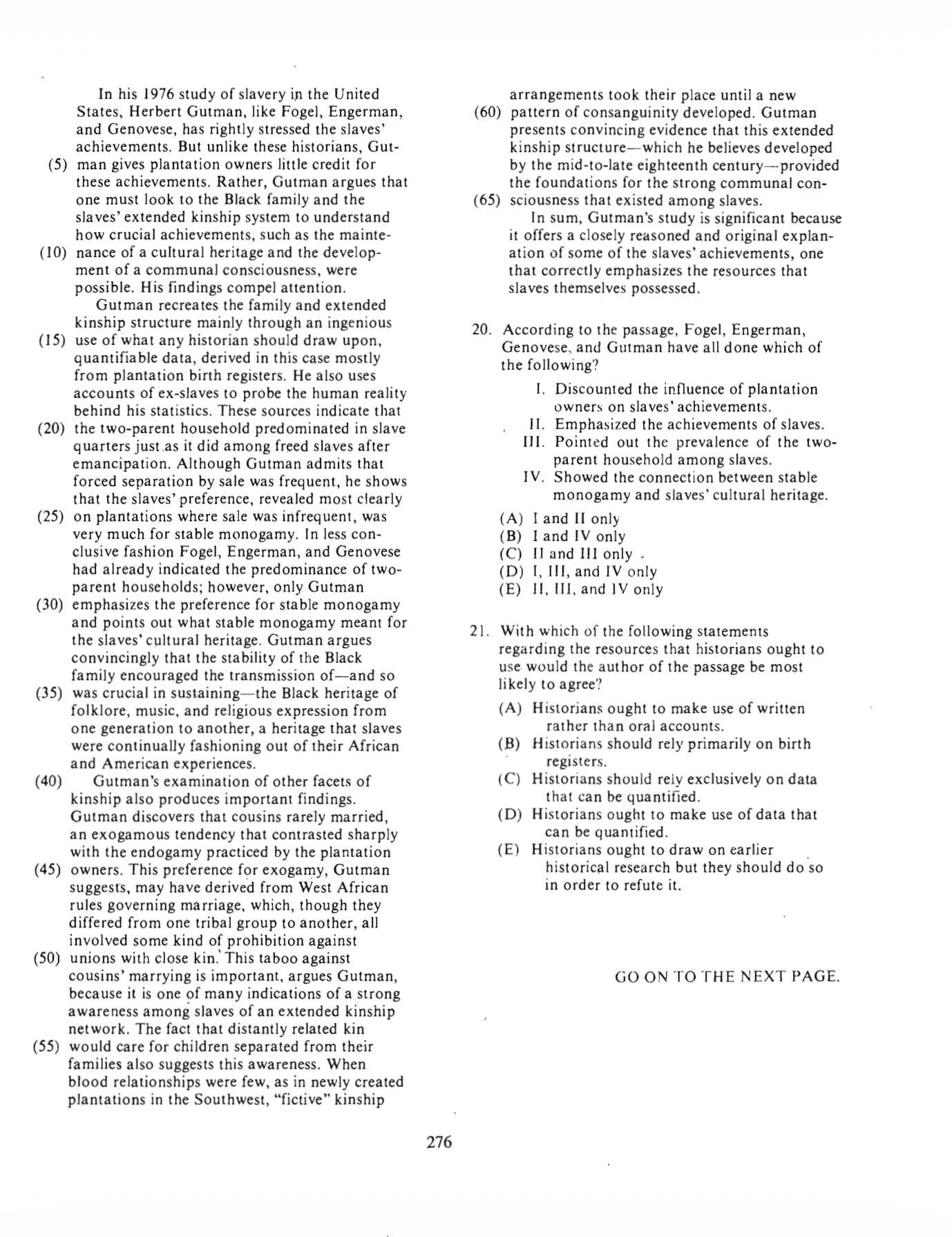
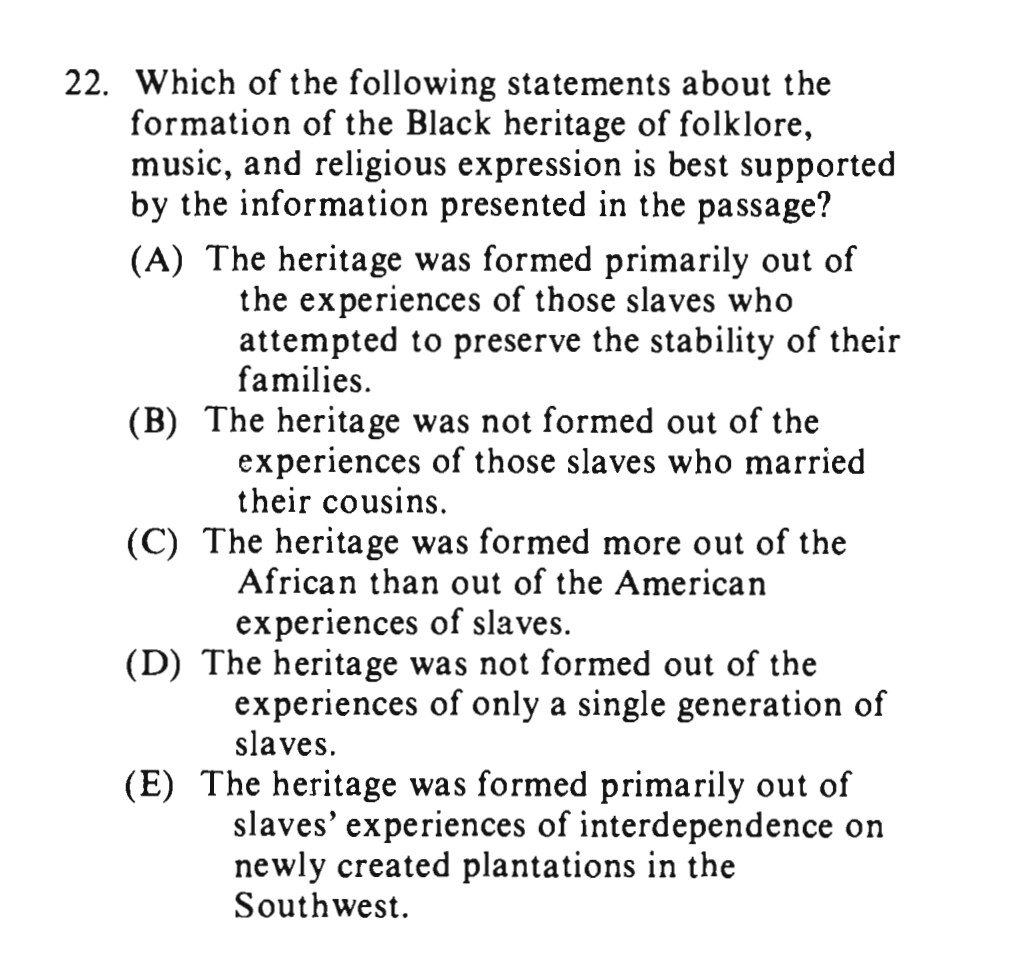
I was struggling with justifying eliminating answer choice A here as at first I was stuck between A and D. I was wondering if my reasoning for eliminating A was sound. Attached are the passage and question for reference.
D The heritage was not formed out of the experiences of only a single generation of slaves.
This option has evidence in line 35-39, explicitly stating that Black heritage was “continually fashioning out of their African and American experiences.” Further mentions of two parent household existing well into the future after emancipation of slaves, and West African rules for exogamy support the same.
A The heritage was formed primarily out of the experiences of those slaves who attempted to preserve the stability of their families.
This at first seemed plausible. Especially since they mention stable monogamy meant something for cultural heritage. The author further goes on to develop this, by elaborating that in lines 32-35 “argues convincingly that the stability of the Black family encouraged the transmission of-and so was crucial in sustaining- the Black heritage…”
My reasoning for eliminating A was centering on the idea of “primarily” + the idea that it helped “transmit” Black heritage. Mainly that transmit ≠ formation of Black heritage (from generation to generation).
When I was referring to the old GRE walkthrough for this question, Greg seemed to hone in on the word “families” in “preserve the stability of families” in the answer choice, stating that it’s not about stability of families but rather culture. I found myself confused about that.
The author does mention stability of family structures being somehow responsible for Black heritage, just not in terms of forming it, only transmitting. How is then preserving stability of families incorrect? Where does preserving of culture come into play?
Since this was a tough question I was wanting some assurance on whether my approach for eliminating A and justifying D was correct or not.
Appreciate the help!