We have yet to (i) __ the assessment of Canada’s biodiversity. Most of the vertebrates have been assessed, but our challenge will be the assessment of invertebrates and plants. This task is (ii) __ not only because of the high number of species, but also because of the diversity, each species requiring a different approach.
Blank (i):
A. initiate
B. complete
C. limit
Blank (ii):
D. repetitious
E. trivial
F. daunting
i tried using the connotation and semantics approach but could not make it , can you explain how to tackle this ?
blank 1 in sentence 1 , i could not find any connotation , but the 1st idea is both the 1st 2 sentences , so i took a sematic guess
“most have been assessed” means it is almost done so → complete
2nd blank is contrast due to “but” , here after but the sentence feels neutral so i went with semantic
so many species means this should a length task and closest i though was repitious
the answer is : complete and daunting (Which makes sense but i am not able to come here using the method)
blank 1 in sentence 1 , i could not find any connotation , but the 1st idea is both the 1st 2 sentences , so i took a sematic guess
“most have been assessed” means it is almost done so → complete
2nd blank is contrast due to “but” , here after but the sentence feels neutral so i went with semantic
so many species means this should a length task and closest i though was repitious
the answer is : complete and daunting (Which makes sense but i am not able to come here using the method)
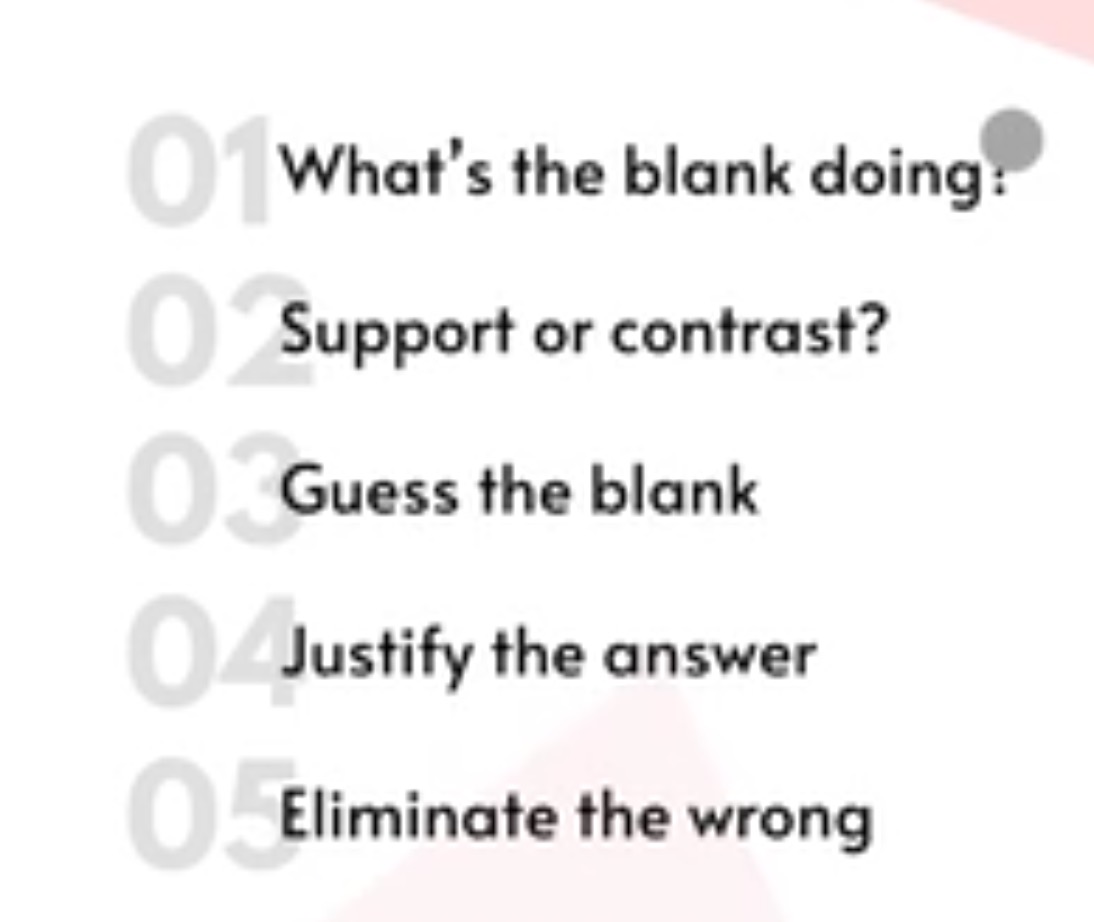
The blank describes something we haven’t yet done to the assessment of canada’s biodiversity
The blank’s idea is being supported by the “.”
Since the other side says “most of the vertebrates have been assessed” it shows that its not finished yet - So I would guess “finish”
We can pick “complete” here, since it conveys the idea that the study is not yet finished
Elimination: initiate (contradiction, since it says vertebrates have been assessed), limit (no evidence that we are trying to restrain the assessment in someway)