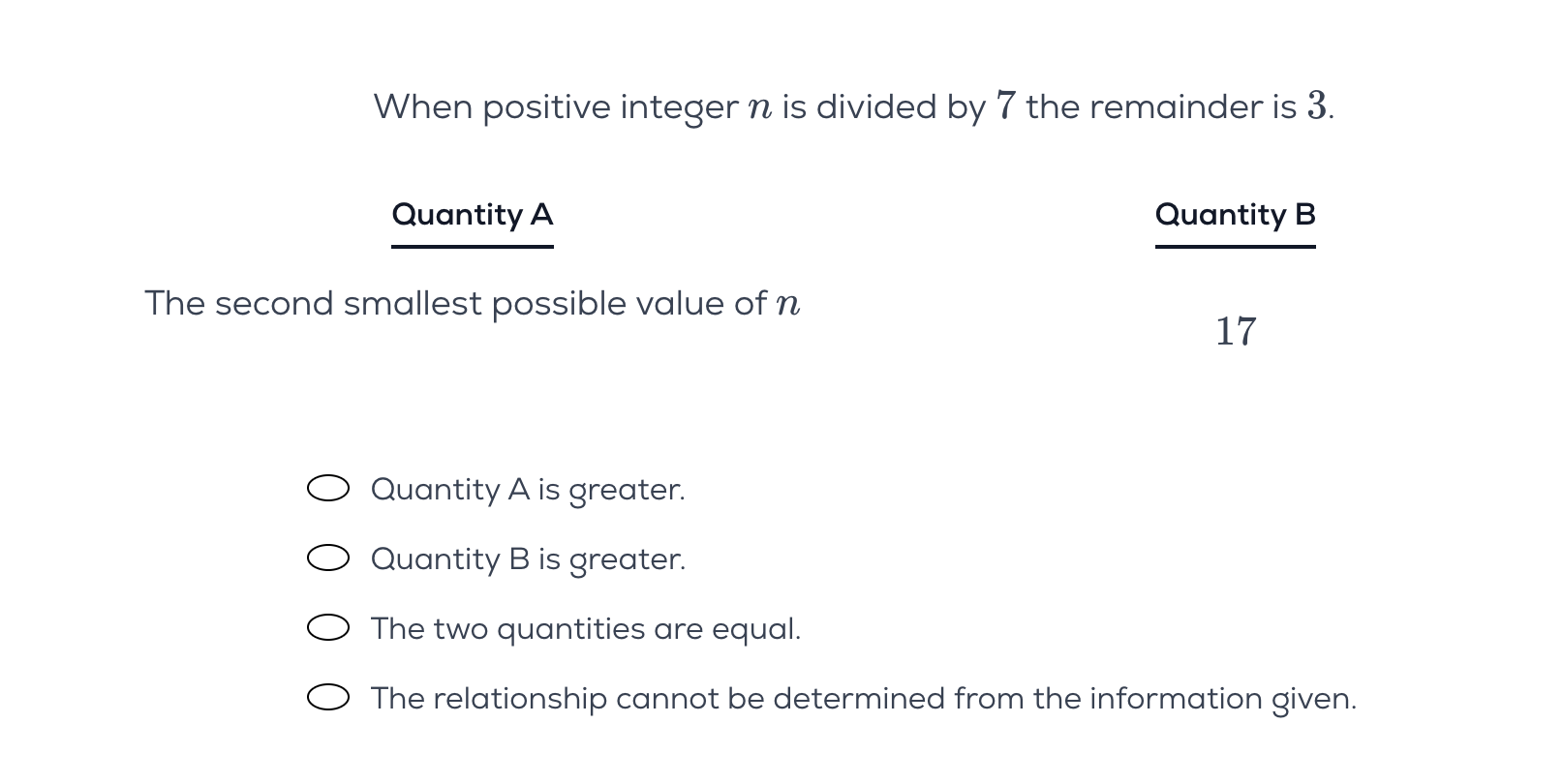
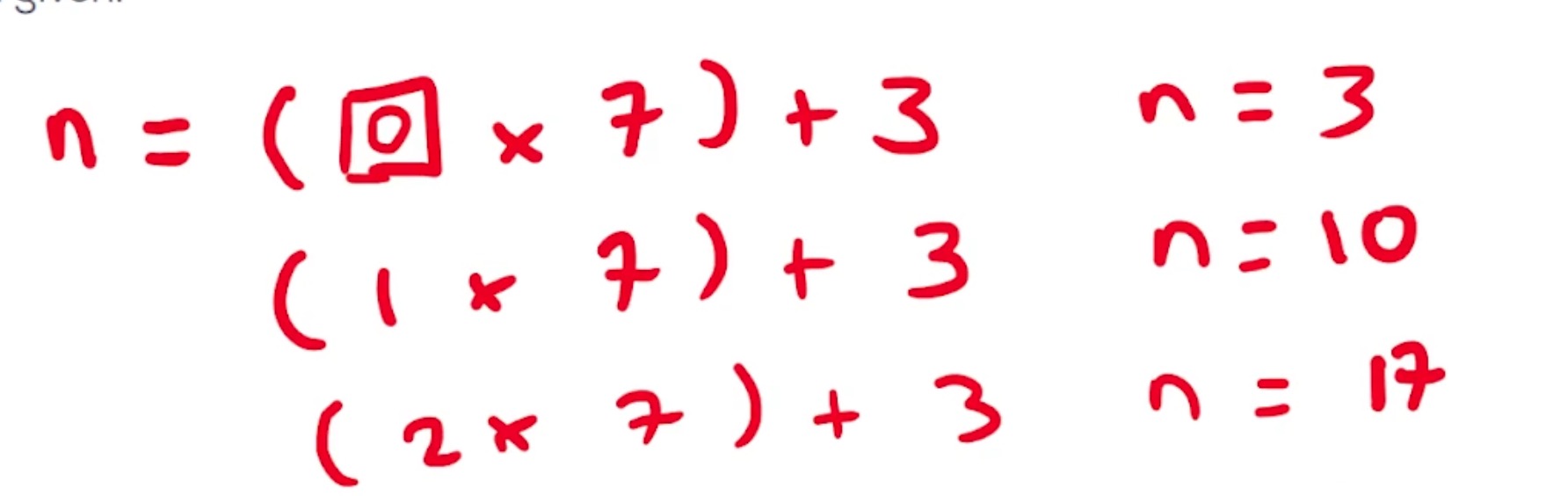
On Arithmetic Progress Quiz #6, the solution and answer guide say that 0 counts as a positive integer to include in your test on question #13…
But in the “zero is strange” video, we are taught that zero is not a positive or negative integer… so I am confused why you would be able to use it in this question as n….
So, even though 0 is not a valid “positive” integer to use, we still use it in our solving process? How can we discern when it’s okay to ignore the guidance in the question?
Per the question, I was under the impression that would eliminate 0 from even being tested, therefore making the second smallest answer 17, giving us answer option C.
Any guidance here? I’m not quite following “we put 0 in the box.”
I’m not sure that’s right. How would n not be used as 0 here? The problem states: “When positive integer n is divided by 7…” Through the logic of the problem, n is equal to the numerator, not the remainder. The problem states that the number being divided by 7 has to be positive. Zero is not a positive number. Therefore, the smallest value cannot be 0, with the second smallest being 10. The smallest would be 10 and the second smallest would be 17, so the two would be equal. This doesn’t make sense to me either.